
|
HISTORY TIDBITS
|
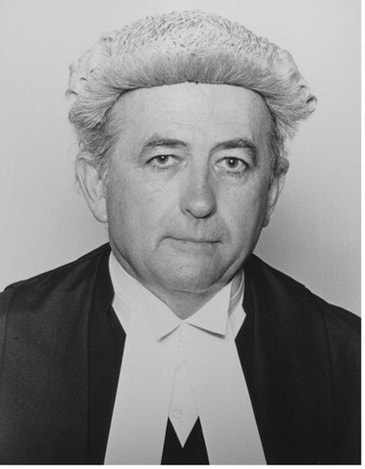 Becoming a solicitor in the 1950s.
We were never encouraged to go to university and really had no idea what a university even was. There was no university in Darwin when we were growing up and when we moved to Sydney, I'd hear girls at school referring to plans for various degrees at university. As a young woman in my early twenties, I frequented Victoria Park swimming pool with my young daughter. The old buildings of Sydney University abutted the pool. They were imposing and unfriendly and reminded me of the Darwin Cathedral where we'd attend Mass on Sundays. I didn' t imagine a place for me there. Rather it looked like a place only the wealthy children of old Sydney families could attend. Three out of six children in my family did wind up at university and obtain degrees but it was a circuitous route. Certainly for me. In my thirties, after eight years, I finally got a BA Soc . A couple of years later I went on and did an MSW as well as accumulating various diplomas and other certificates along the way. Perhaps trying to prove something to myself, and my parents. My father specifically. Over more recent years I have wondered about the university question . No one I knew in Darwin went onto university so it wasn't on our radar. Mum was a very intelligent woman but any aspirations were frustrated by caring for six kids and thwarted by mental illness. Dad was a Queens Counsel (and Solicitor General for a time). Did he not want us to succeed at academia? He certainly never played any part in our schooling and in our family there was only room for one brilliant alpha male. All that aside I eventually realised that Dad in fact never went to University and I believe there was some shame about that. In the 1950s and 60s, becoming a lawyer in Australia without a university degree was possible through the articles of clerkship system, an apprenticeship model. Aspiring lawyers worked as articled clerks in private firms while studying for legal practitioners' board exams, allowing them to gain practical training alongside their studies. Following is a detailed first person account of my father's legal journey. Reading it again I am struck by his humour, and his determination to keep purueing the law. (Later on he did tell me he had really wanted to be a journalist.) "My father talked me into starting a career in law. I became articled to the Dairy Farmers’ solicitor and bound to him as an articled law clerk for 5 years. I have heard it said that it might have been better for me to have sought a university degree, although 5 years assisting solicitors was clearly educative. Some said the system was designed to give solicitors a source of cheap labour. Whether or not that was the design, it does seem to have been the result. I signed up in 1952, being paid a weekly wage of thirty shillings which, in due course leaped to two pounds. My academic object was to obtain a diploma from the Solicitors’ Admission Board which would then entitle me to admission as a solicitor. The Board then did very little to assist aspiring law clerks. There were no lectures or tutorials (At least none to which I was invited). One advantage in the system was you could sit for examinations an indefinite number of times, which was just as well for me because it took me 8 years instead of the usual 5. The activities of the Solicitors’ Admission Board seemed to be largely distributing university lecture notes and providing a small rather arid man in a black Alpaca jacket who told me from time to time why I had failed. Of necessity, one had to find a tutor who had more than a passing knowledge of law. But I did make some friends at the bar in those years, which enured to my advantage in later years. My memory is a bit fuzzy around the edges but as I recall life as an articled clerk I was permanently overdrawn in the petty cash and drank quite a deal of beer. So did a few others. A well-known Sydney solicitor fixed a notice to the front of the Supreme Court in King Street, stating something like this: “wanted, articled law clerk ability to pass licensed premises an advantage” Licensed premises were many, and less elegant than the present abode of investment bankers and stock brokers. Gone are the Australia, the Metropole, the Carlton, the Surry and Claude Fays (Hornsby), to name a few. In about 1953 I moved to Muswellbrook where I received a liveable weekly wage of twenty pounds from a local solicitor; my articles followed. Unfortunately it was not a successful union and after four months we parted with mutual relief. My articles and I then went to Katoomba to a more convivial firm. I had to work harder, having married and produced a son. Eventually I managed to pass the necessary examinations. My technique in absorbing the material necessary for a pass was to buy Dexedrine by the handful, over the pharmacy counter. I then moved into the flat of another hopeful, 48 hours before the exam, and stayed awake. We went through as many past exam results as we could find. In the end it worked. Dexedrine is now available only on prescription; it is something of a miracle that article clerks survived the rigours of the Solicitors’ Admission Board examinations. I do not advise the use of Dexedrine.
0 Comments
|
AuthorWrite something about yourself. No need to be fancy, just an overview. Archives
March 2026
Categories |
 RSS Feed