
|
HISTORY TIDBITS
|
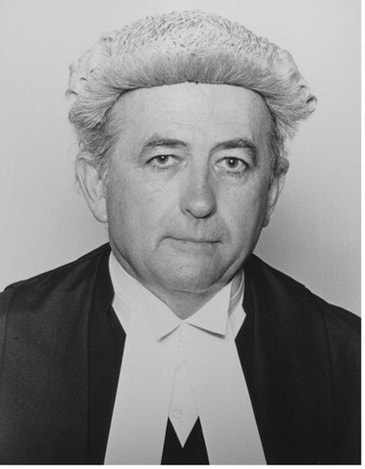 Becoming a solicitor in the 1950s.
We were never encouraged to go to university and really had no idea what a university even was. There was no university in Darwin when we were growing up and when we moved to Sydney, I'd hear girls at school referring to plans for various degrees at university. As a young woman in my early twenties, I frequented Victoria Park swimming pool with my young daughter. The old buildings of Sydney University abutted the pool. They were imposing and unfriendly and reminded me of the Darwin Cathedral where we'd attend Mass on Sundays. I didn' t imagine a place for me there. Rather it looked like a place only the wealthy children of old Sydney families could attend. Three out of six children in my family did wind up at university and obtain degrees but it was a circuitous route. Certainly for me. In my thirties, after eight years, I finally got a BA Soc . A couple of years later I went on and did an MSW as well as accumulating various diplomas and other certificates along the way. Perhaps trying to prove something to myself, and my parents. My father specifically. Over more recent years I have wondered about the university question . No one I knew in Darwin went onto university so it wasn't on our radar. Mum was a very intelligent woman but any aspirations were frustrated by caring for six kids and thwarted by mental illness. Dad was a Queens Counsel (and Solicitor General for a time). Did he not want us to succeed at academia? He certainly never played any part in our schooling and in our family there was only room for one brilliant alpha male. All that aside I eventually realised that Dad in fact never went to University and I believe there was some shame about that. In the 1950s and 60s, becoming a lawyer in Australia without a university degree was possible through the articles of clerkship system, an apprenticeship model. Aspiring lawyers worked as articled clerks in private firms while studying for legal practitioners' board exams, allowing them to gain practical training alongside their studies. Following is a detailed first person account of my father's legal journey. Reading it again I am struck by his humour, and his determination to keep purueing the law. (Later on he did tell me he had really wanted to be a journalist.) "My father talked me into starting a career in law. I became articled to the Dairy Farmers’ solicitor and bound to him as an articled law clerk for 5 years. I have heard it said that it might have been better for me to have sought a university degree, although 5 years assisting solicitors was clearly educative. Some said the system was designed to give solicitors a source of cheap labour. Whether or not that was the design, it does seem to have been the result. I signed up in 1952, being paid a weekly wage of thirty shillings which, in due course leaped to two pounds. My academic object was to obtain a diploma from the Solicitors’ Admission Board which would then entitle me to admission as a solicitor. The Board then did very little to assist aspiring law clerks. There were no lectures or tutorials (At least none to which I was invited). One advantage in the system was you could sit for examinations an indefinite number of times, which was just as well for me because it took me 8 years instead of the usual 5. The activities of the Solicitors’ Admission Board seemed to be largely distributing university lecture notes and providing a small rather arid man in a black Alpaca jacket who told me from time to time why I had failed. Of necessity, one had to find a tutor who had more than a passing knowledge of law. But I did make some friends at the bar in those years, which enured to my advantage in later years. My memory is a bit fuzzy around the edges but as I recall life as an articled clerk I was permanently overdrawn in the petty cash and drank quite a deal of beer. So did a few others. A well-known Sydney solicitor fixed a notice to the front of the Supreme Court in King Street, stating something like this: “wanted, articled law clerk ability to pass licensed premises an advantage” Licensed premises were many, and less elegant than the present abode of investment bankers and stock brokers. Gone are the Australia, the Metropole, the Carlton, the Surry and Claude Fays (Hornsby), to name a few. In about 1953 I moved to Muswellbrook where I received a liveable weekly wage of twenty pounds from a local solicitor; my articles followed. Unfortunately it was not a successful union and after four months we parted with mutual relief. My articles and I then went to Katoomba to a more convivial firm. I had to work harder, having married and produced a son. Eventually I managed to pass the necessary examinations. My technique in absorbing the material necessary for a pass was to buy Dexedrine by the handful, over the pharmacy counter. I then moved into the flat of another hopeful, 48 hours before the exam, and stayed awake. We went through as many past exam results as we could find. In the end it worked. Dexedrine is now available only on prescription; it is something of a miracle that article clerks survived the rigours of the Solicitors’ Admission Board examinations. I do not advise the use of Dexedrine.
0 Comments
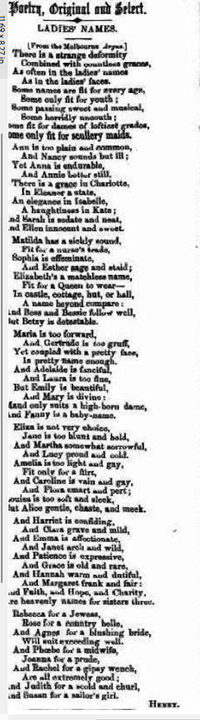 Adelaide Observer Sat 22 May 1852 Page 2 Poetry, Original and Select.  BARKER The origin of the surname Barker is English and has been found in records as early as 1200. Barker is an occupational surname that refers to those who stripped and prepared bark for use in the tanning process, and their descendants. The Barker name is more prevalent in the north of the country than in the south, where 'Tanner' is more frequently seen. A less common believed origin of this name is the Old French 'Berchier' (shepherd), and a Norman family 'Le Bercher' are thought to have been the progenitors of a number of notable Barker lines.  PEARD The surname Peard is primarily of English origin, likely developing as a variant of Peart with a voiced final "-d". Peart can come from a nickname meaning 'lively' or 'bold', or a habitational name from the city of Perth. Some sources suggest it could also be a locational name, stemming from the Old English word "pere" for pear tree, and given to individuals who lived near pear orchards.  DUNLOP The name Dunlop originates from Scotland and is a geographical name from the Gaelic "dùn" (fort) and "laib" (bend), meaning "fort on the bend" or "fort at the hill". It is derived from the village of Dunlop in Ayrshire, where the name was first recorded in the 13th century, referring to an ancient hill fort. 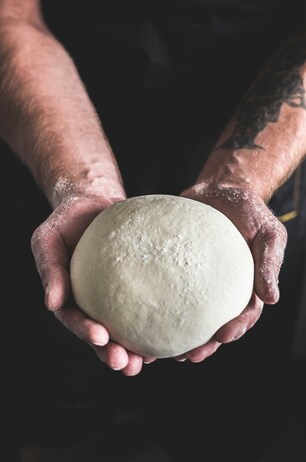 BAX As a shortened form of "Baxter," which itself is derived from the Old English and Middle English occupational name for a "baker" (bakester or bakstere). 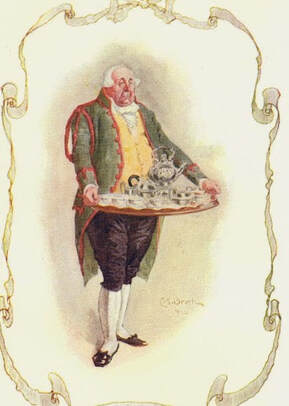 BUTLER English and Norman origin: The name comes from the Old French butuiller (or Norman French butuiller), which evolved from the Latin buticula for "bottle" Occupational: It originally identified someone who was in charge of the wine cellar or was a chief servant in a medieval household. Social status: Over time, the title came to denote a position of high responsibility, and the surname was adopted by those who held or were descended from the position, regardless of their specific duties.  MORRIS The Morris surname origin is varied, but is mostly believed to originate in the British Isles (where it is the 32nd most common name in England and Wales and has been found in the border between these countries as early as the Norman Conquest of 1066). Morris is thought to most often be a patronymic name, referring to the personal name 'Maurice' in England and Scotland, or 'Meurig' in Wales. The surname Morris can also sometimes be derived from someone who lived on the moors. In English-speaking countries it can also be seen as an anglicisation of the German name 'Moritz'. 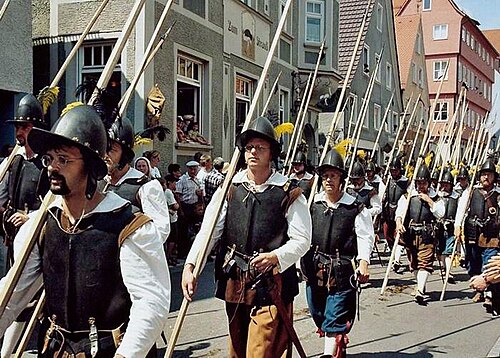 A modern recreation of a mid-17th century company of pikemen. By that period, pikemen would primarily defend their unit's musketeers from enemy cavalry. A modern recreation of a mid-17th century company of pikemen. By that period, pikemen would primarily defend their unit's musketeers from enemy cavalry. PIKE Topographic: From the Old English word pīc, meaning "pointed hill" or "peak," suggesting someone who lived near such a landmark. Occupational:
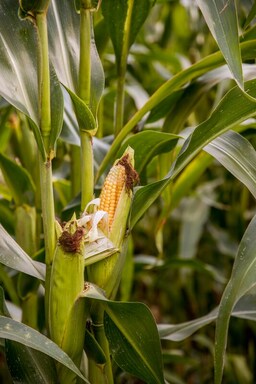 CORNEY Place name: Derived from places named Corney in Cumbria or Hertfordshire, potentially from the Old English corn ("grain" or a metathesized form of "crane") cron and ēg ("island"). It could also be from a lost place in Lancashire. Variant of other names: May be a shortened form of Cornwell or Cornish or a habitational name from a place in Lancashire later known as Corneyrow. 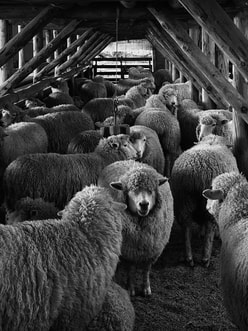 PENFOLD The name's core meaning relates to an enclosure or pen for livestock, a common feature in medieval communities. It is an English surname with early records appearing in Sussex and Oxfordshire around the 13th century.
 FISH
Fish is a variation of Fisher. The surname originates in England and is seen in records from as early as the 1200s. Fisher is most often an occupational name from the Middle English 'fischere', given to those who fished, were fishermen, or sold fish, and their descendants. The surname Fisher is sometimes believed to be topographical, referring to those who live closer to river fishing traps.
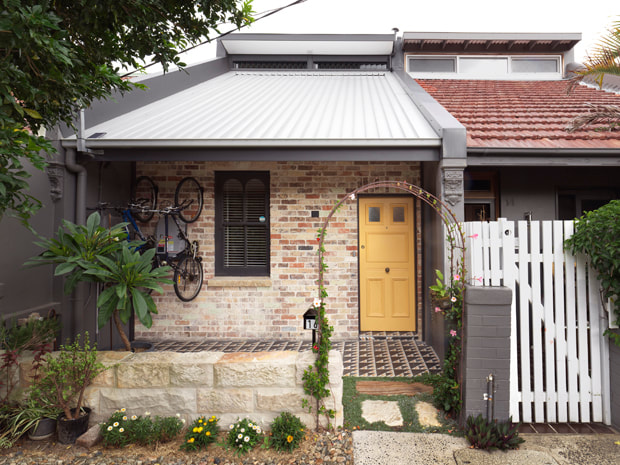
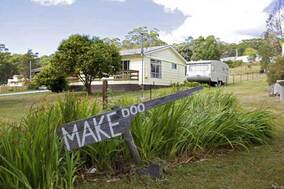
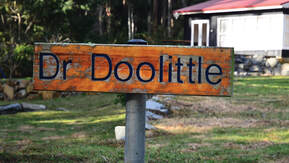
 Akoonah is an aboriginal word meaning 'running waters'. Akoonah is an aboriginal word meaning 'running waters'. For example, the 1915 Sands Directory for Woollahra lists properties with names such as Willesden, Kirkdale, Brighton, Stratherne and Linwood; all referring to places in the UK. There is a Te Aroha named after a NZ town. Other names such as 'the Glen' indicate nostalgia for Scotland. More fun is 'Iolanthe' named after a comic Gilbert and Sullivan Opera of 1882. My own Great Grandfather, ROBERT HENRY MORRIS, and his family lived in a house on Lennox St named 'Dulce Domun' meaning 'Sweet Home' in Latin. Aboriginal words were also freely appropriated for naming houses. Mia-Mia, (shelter), Karinya (peaceful place) and Cooinda (happy place) were a few that were regularly used. My Great Grandmother EDITH EMILY BAX lived in Alt St, Waverley and she named her house which she built, 'Amaroo' which translates to 'Beautiful Place'. Plaques with names were often attached to the front of the house. Many of these still survive. People still today choose house names and erect signs as a nod to nostalgia. 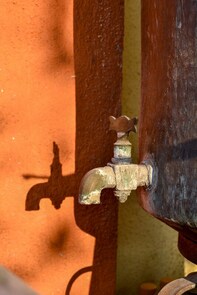 As an aside, original outside taps can often help to indicate the year a house was built, particularly in NSW. They were usually inscribed with the year they were manufactured and approved by the Metropolitan Water Sewerage & Drainage Board (MWSB). The side or the curved part of the tap is usually where you can find the stamped year. On a fun finishing note, I recall a trip to Tasmania, many years ago, where we came across Doo Town. Nearly every home was a pun on Doo; Make Doo, This will Doo, D oo come in, Just Doo it, Love Me Doo, Much-A-Doo etc.
Do you want to know more about your house? There is a plethora of material available and local councils are a wonderful resource. Trove is a wonderful place to start. I have found so many fabulous tid bits about houses my ancestors have lived in. It can really bring the house and its inhabitants to life. Typing the address into Trove is a good starting point. Also a good facebook group to join, 'Our old house'. Here are some links: https://trove.nla.gov.au/ www.library.gov.au/learn/adults/lifelong-learning/how-trace-history-your-house www.facebook.com/groups/1706748102970911/posts/3401609216818116/  TENTERFIELD Was originally inhabited by the Jukumbal* people, (also known as Yukumbal), as well as the Bundjalung and Kamilaroi people. Tenterfield was known as Moombilleen, often noted as meaning 'place of wild honey.' However there is also reference to the word Moom meaning death and billeen meaning small creek, which could have referred to the existing creek, dry in Summer and flowing in Winter. *I want to acknowledge the dark history of brutality, massacre and the decimation of culture of the traditional owners of the region. As is the history of most Australian towns and regions. I will write more about this in the future and will endeavour to bring a truth telling light to the history of all the places my ancestors settled. The first premier of NSW , Sir Stewart Alexander Donaldson, (along with Sir Robert Ramsay Mackenzie), established a property in Tenterfield running around 18,000 sheep on 100,1000 acres. He named the property, Tenterfield Park' after his aunt's property in Scotland. A tenterfield refers to a Scottish practice of using a field to hang sheep fleece to stretch and dry on tenters; frames with hooks.  View of Parramatta, watercolour 1839 By Conrad Martens View of Parramatta, watercolour 1839 By Conrad Martens PARRAMATTA Parramatta's name comes from the Dharug word Burramatta or Baramada, which is commonly translated as "place where the eels lie down" or "head of waters". This name reflects the area's significance as a meeting and gathering place for the traditional Burramattagal clan of the Dharug people who relied on the rich food sources from the Parramatta River, particularly eels. LISMORE Many pastoral stations were established and licensed in the were granted in the early 1840s in the lower reaches of the Richmond River. In 1843 an attempt was made by Captain Dumaresq to establish a station with 23,000 sheep on the Northern arm of the Richmond. The subtropical climate was problematic for grazing and the property was sold to William and Jane Wilxon in 1845. They named it Lismore, after a small island in Loch Linnhe in the Scottish highlands. In 1855 a surveyor was ordered to determine a suitable site for a township at the confluence of the Wilson and Richmond Rivers. The site chosen was Wilson’s homestead paddock and this site was proclaimed the Town of Lismore in the Government Gazette on 1 May 1856. The traditional owners of Lismore are the Widjabul/Wia-bal people, who are part of the larger Bundjalung nation. The Bundjalung nation's traditional lands stretch from the Clarence River in the south to the Logan River in Queensland. The Widjabul/Wia-bal are the specific group of the Bundjalung nation reported to have inhabited the Lismore region.  John Dawson Forbes' photo of the northside of Woodlark Street. (c1880) |
AuthorWrite something about yourself. No need to be fancy, just an overview. Archives
March 2026
Categories |
 RSS Feed